Brackets & Side Pots
Brackets
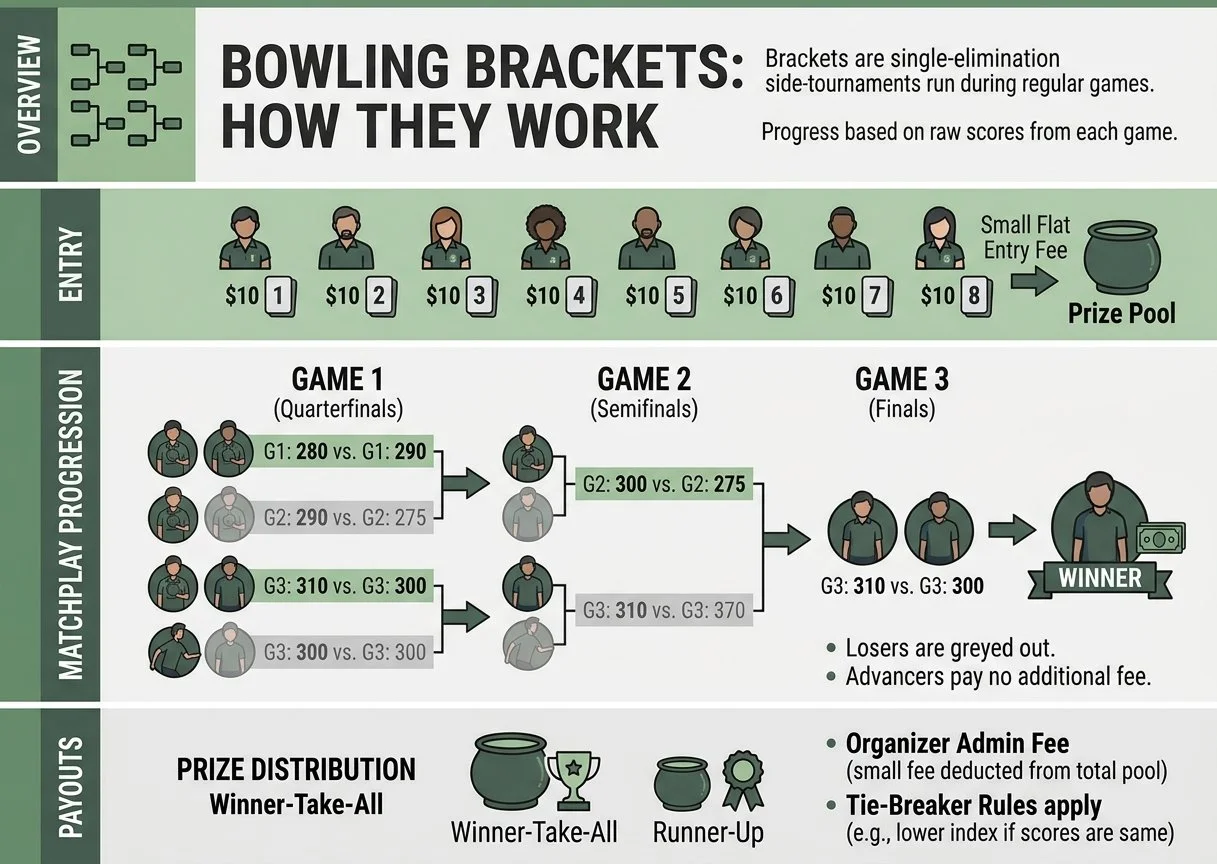
A bowling bracket is an eight-person, single-elimination side tournament that takes place concurrently during regular three-game league or tournament play. Bowlers pay a small entry fee to join a bracket, and their actual game scores from the night are used to determine who advances.
Bracket Structure
Game 1 (Quarterfinals): Eight bowlers are randomly paired into four head-to-head matches. The bowler with the higher score in each pair advances to the next round, while the loser is eliminated from that specific bracket.
Game 2 (Semifinals): The four advancing bowlers are paired into two matches using their scores from the second game of the league night. The two winners advance.
Game 3 (Finals): The final two bowlers compete head-to-head using their scores from the third game. The bowler with the highest score wins the bracket.
Scoring Formats
Scratch Brackets: Advancement is based purely on the raw score bowled, without any adjustments.
Handicap Brackets: Advancement is based on the raw score plus the bowler's established league handicap, leveling the playing field for bowlers with different averages. Tie-breakers in handicap brackets are usually awarded to the bowler with the lower handicap.
Side Pots, Eliminators, and Big Dog
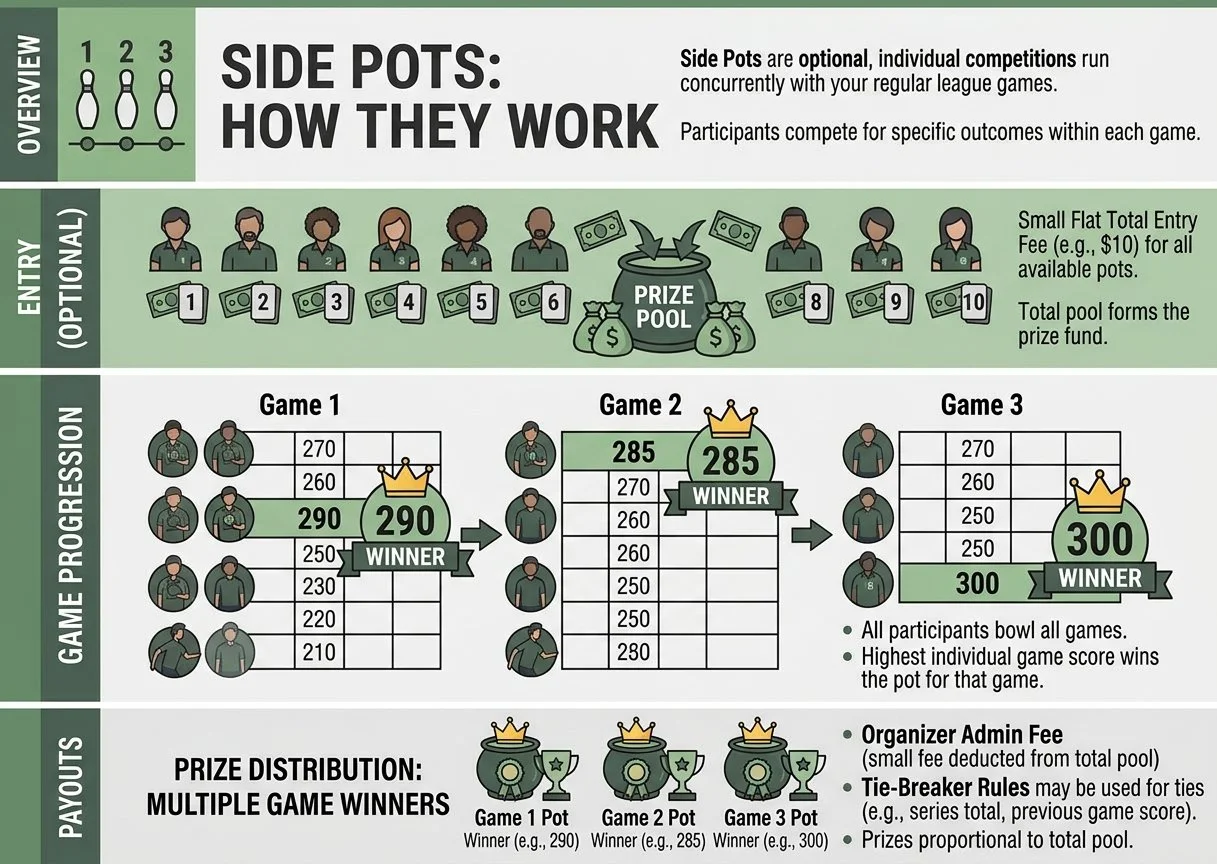
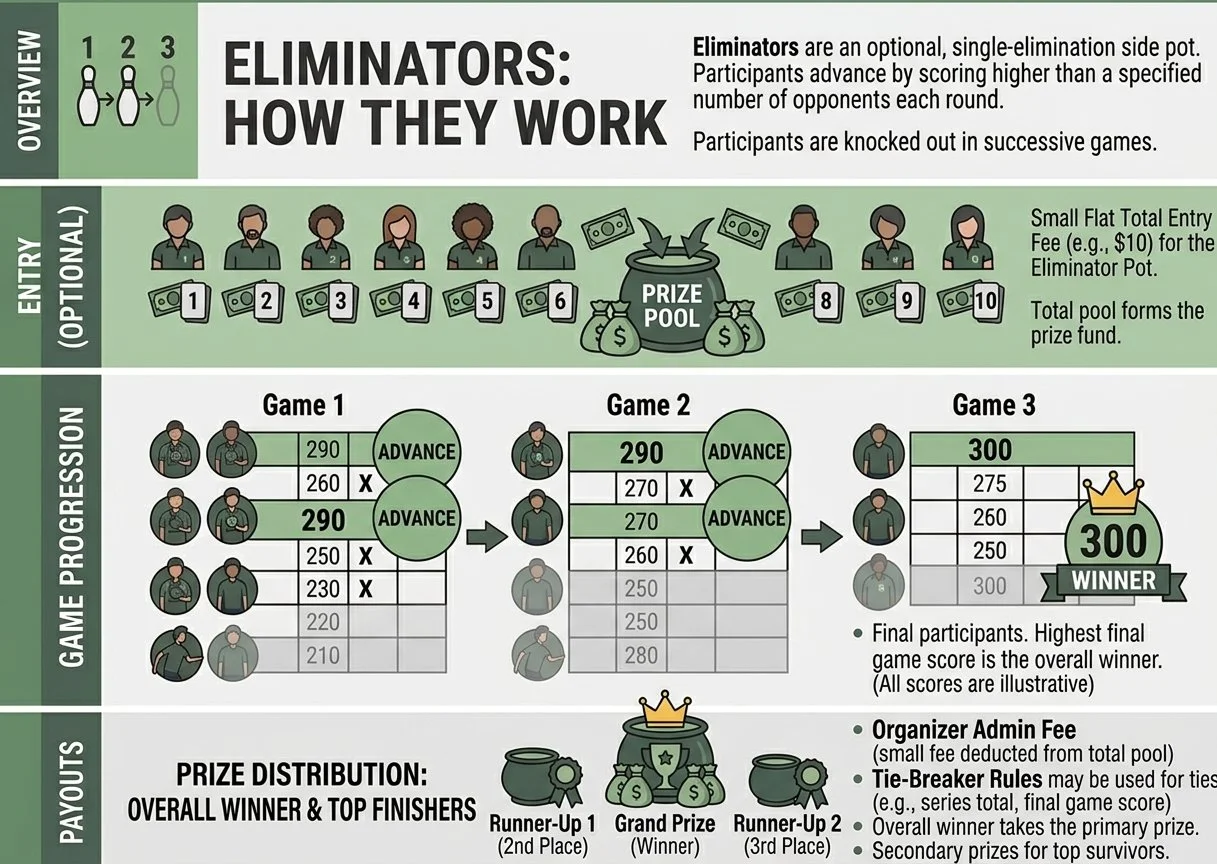
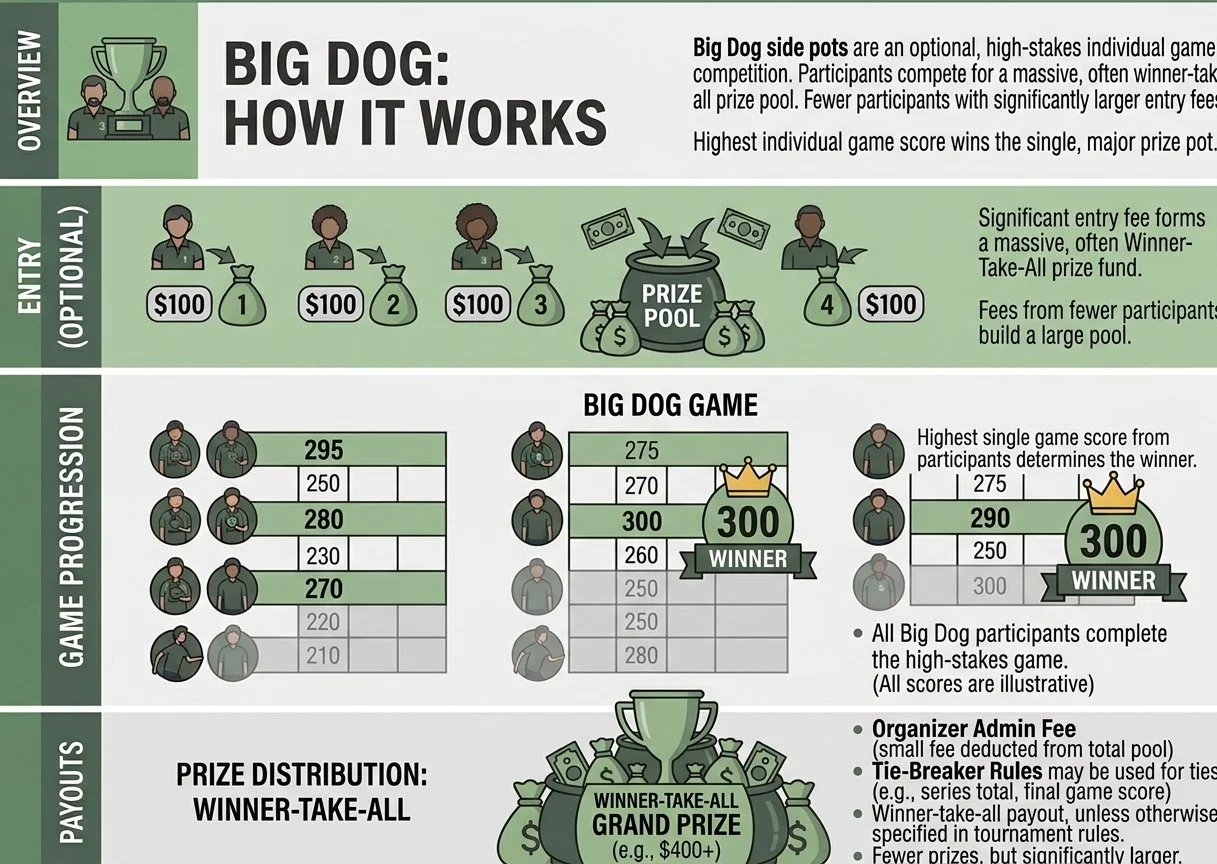
Side pots, Eliminators, and Big Dog are optional side games that run concurrently with your regular league or tournament play, using the scores you are already rolling to determine winners.
Side Pots (High Game Pots) Side pots reward the highest individual game scores during a session.
Structure: Bowlers pay a flat entry fee (e.g., $10) which goes into a collective prize pool.
Payouts: The pool is divided equally among the number of games played that night (typically three). The bowler who posts the highest score among the entrants in Game 1 wins the first pot, the highest in Game 2 wins the second, and the highest in Game 3 wins the third.
Format: Side pots are often split into separate scratch (raw score) and handicap divisions, requiring separate entry fees for each.
Eliminators (Survivor) Eliminators are survival-style side games where the field of competitors shrinks game by game.
Game 1: All entrants post their first game score. A predetermined number or percentage (e.g., the bottom 50%) of the lowest-scoring bowlers are eliminated from the game.
Game 2: The surviving bowlers use their second game score to compete. Once again, the lowest scorers are cut from the field.
Game 3: The remaining "survivors" use their final game score to determine the ultimate winner. The prize pool is usually awarded entirely to the bowler with the highest Game 3 score among the finalists, or split between the top two.
Big Dog (High Roller Pot) The "Big Dog" pot is a high-stakes, high-reward side game geared toward top competitors confident in their ability to post massive scores.
Structure: It features a significantly higher entry fee than standard side pots or brackets (e.g., $20–$50 compared to the standard $5).
Payouts: Big Dog pots are typically structured as a "winner-take-all" prize for the highest overall three-game series of the night (or sometimes the single highest game of the night) among the entrants.
Format: This game is almost exclusively bowled scratch. It appeals to highly skilled bowlers looking for larger payouts without the leveling effect of handicaps.